The Ultimate Guide to Digital Insulation Tester in the UK
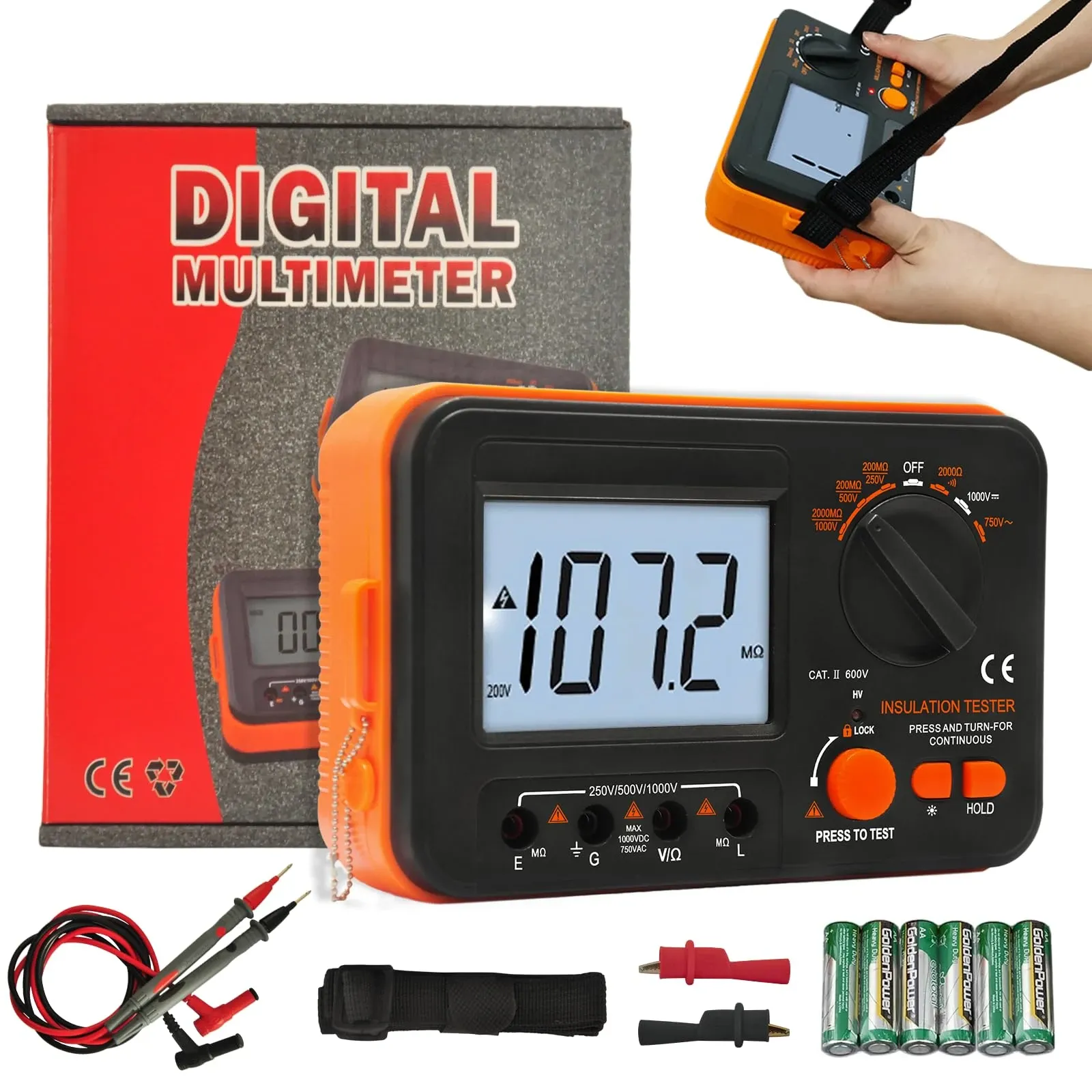
A digital insulation tester is a specialist electrical test instrument used to meansulation resistance in cables, circuits, motors and installations, helping electricians and maintenance teams identify deterioration, moisture ingress and potential faults before they become dangerous or costly. In the UK, it is widely used to support inspection, testing and compliance work in line with BS 7671 and good practice guidance.
TL;DR: A digital insulation tester applies a DC test voltage to check how well electrical insulation resists leakage current. It is used by UK electricians, contractors and maintenance engineers for fault finding, periodic inspection and preventative maintenance. Look for the right test voltages, CAT safety rating, stable readings, continuity features and clear compliance support if you want reliable results on domestic, commercial or industrial systems.
Why does a digital insulation tester matter?
Insulation breakdown is one of the most common causes of electrical unreliability. Over time, heat, vibration, age, contamination and damp can reduce insulation resistance and increase leakage current. As a result, circuits may trip unexpectedly, equipment may fail prematurely and electric shock risks can rise.
According to UK electrical testing practice, insulation resistance testing forms an important part of initial verification, periodic inspection and maintenance. Therefore, choosing the right digital insulation tester is not simply about convenience; it supports safer diagnostics and more confident decision-making.
What is a digital insulation tester?
A digital insulation tester, often called an insulation resistance tester or megohmmeter, is designed to measure very high electrical resistance values, typically in megohms (MΩ), gigaohms (GΩ) or higher. Unlike a standard multimeter, it generates a controlled DC test voltage such as 250V, 500V or 1000V to assess the condition of insulating materials.
In practice, this means it can reveal whether cable insulation, winding insulation or installation wiring is still performing adequately under test conditions. Consequently, it helps detect hidden deterioration that may not be obvious during a visual inspection alone.
For UK users, this makes the instrument especially useful during EICRs, commissioning work and planned maintenance in accordance with BS 7671 requirements and site-specific procedures.
How does a digital insulation tester work?
A digital insulation tester applies a known DC voltage between conductors or between conductors and earth. It then measures the tiny leakage current that flows through the insulation. Using Ohm’s law, the instrument calculates the resistance value and displays it digitally.
The higher the resistance reading, the better the insulation generally is. Conversely, low readings may suggest contamination, moisture ingress, damaged cable sheathing or general ageing.
What test voltages are commonly used?
Common ranges include:
- 250V DC for sensitive equipment or lower-voltage applications where appropriate
- 500V DC for many low-voltage installation tests in the UK
- 1000V DC for higher-rated equipment or where standards and manufacturer guidance call for it
- Above 1000V for specialist industrial applications such as motors, switchgear and HV-related maintenance work
What does the reading tell you?
A single reading gives a snapshot of insulation condition at that moment. However, based on our testing experience with professional diagnostic instruments, trend data is often even more useful than one isolated figure. For example, if readings gradually fall over successive inspections, that may indicate deterioration long before outright failure occurs.
What is a good insulation resistance reading?
The answer depends on the type of installation, equipment rating and applicable guidance. In UK installation testing, minimum acceptable values are often referenced within BS 7671 procedures; however, many healthy circuits will read far above the minimum threshold.
According to UK guidelines and standard industry practice:
- Higher readings are generally better, provided testing has been carried out correctly
- The minimum pass value is not always the ideal benchmark; well-maintained systems often exceed it comfortably
- Consistency matters; sudden drops compared with previous records should be investigated
- The circuit must be interpreted in context, especially where electronic devices are connected
Therefore, electricians should use both standards-based thresholds and engineering judgement when assessing results.
What is a digital insulation tester used for?
A digital insulation tester is used anywhere electrical insulation integrity needs to be checked accurately. This includes both routine compliance work and condition-based diagnostics.
Common uses in the UK include:
- Testing fixed wiring during initial verification
- Supporting Electrical Installation Condition Reports (EICRs)
- Troubleshooting nuisance tripping or unexplained leakage issues
- Checking motors, transformers and switchgear during maintenance
- Assessing cables after installation or repair work
- Monitoring ageing assets in commercial or industrial environments
- Verifying disconnection of circuits before recommissioning where required by procedure
In addition, maintenance teams often use these instruments as part of preventative programmes because early detection usually costs far less than unplanned downtime.
Why choose a digital insulation tester over an analogue model?
Although analogue testers still have some followers, digital models are usually preferred for modern professional diagnostics because they offer clearer readings, better repeatability and more advanced functions.
What are the advantages of a digital insulation tester?
- Easier-to-read display: clear numeric values reduce interpretation errors
- Improved accuracy: especially useful when recording results formally
- Multiple test voltages: suitable for different circuit types and equipment categories
- Extra diagnostics: some models include PI and DAR testing
Ready to upgrade your toolkit with Megohmmete?
Shop Testers — £69.31