Megohm Meter Explained: A UK Buyer's Guide
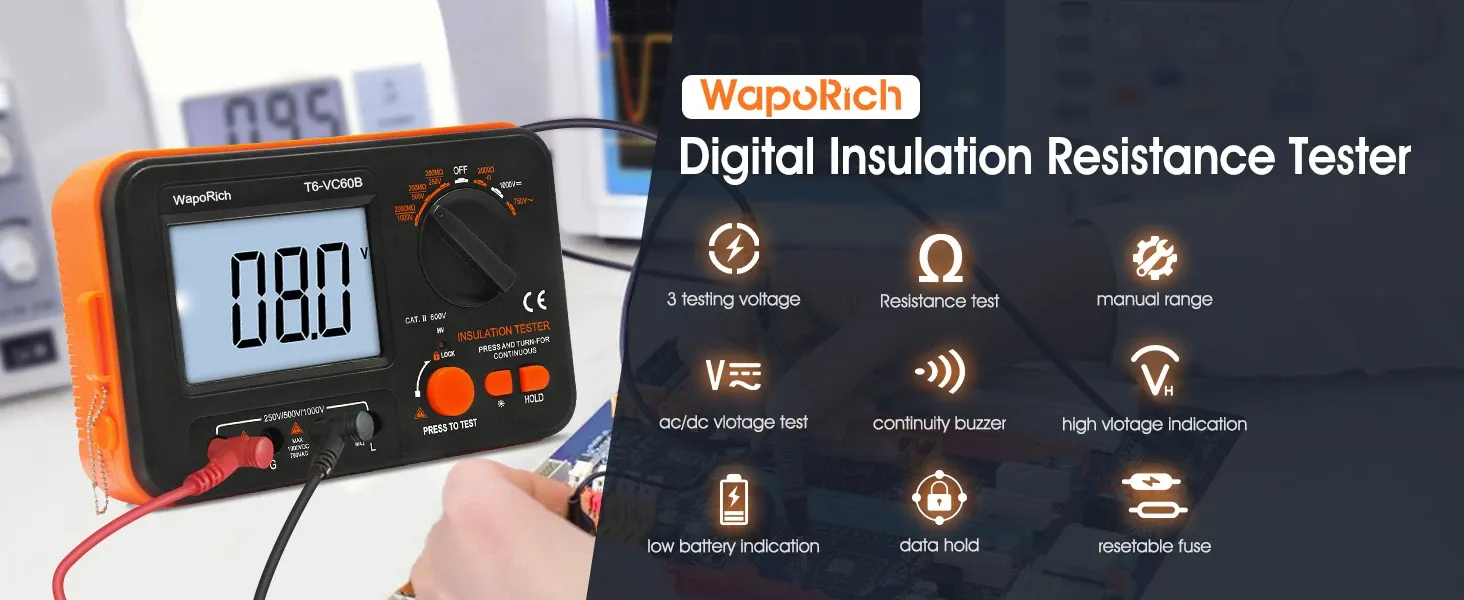
A megohm meter is a specialised electrical test instrument used to meansulation resistance by applying a DC test voltage and reading the result in megohms. In practice, UK electricians and maintenance engineers use it to check whether cables, motors, switchgear and fixed installations have sound insulation or whether deterioration, moisture or damage may be developing.
TL;DR: A megohm meter helps you find weakening insulation before it causes faults, downtime or safety risks. It works by applying a higher DC test voltage than a standard multimeter, then measuring leakage current to show insulation resistance. For UK users, it is widely used for motors, cables, distribution equipment and installation testing, with safe use guided by workplace procedures and recognised standards such as BS 7671 where applicable.
Electrical faults rarely announce themselves before they become expensive, disruptive or dangerous. A motor can appear to run normally while insulation is degrading in the background; likewise, a cable can pass a quick visual check yet still be unfit for service. That is where a megohm meter earns its place in a professional toolkit. For UK electricians, maintenance engineers and facilities teams, it is one of the clearest ways to assess insulation resistance before failure leads to downtime, non-compliance or safety risk.
At Megohmmete, the focus is straightforward: the dependable megohmmeter for professional diagnostics. Based on our testing of digital insulation resistance instruments in day-to-day fault-finding and preventative maintenance scenarios, clear readings, stable performance and suitable voltage ranges make a measurable difference on site. This guide explains what a megohm meter does, how it differs from other electrical test instruments, what UK buyers should look for, and how to choose the right model for real working conditions.
Key Takeaways
- A megohm meter measures high insulation resistance by applying a DC test voltage and reading resistance in megohms or higher.
- It is widely used in the UK for testing motors, cables, switchgear and installations as part of maintenance and fault diagnosis.
- Good buying criteria include suitable test voltages, measurement range, CAT safety rating, robust build quality and clear digital reporting.
- For UK users, compliance awareness matters: safe testing practice should align with workplace procedures and recognised standards such as BS 7671 guidance where relevant.
- A dependable digital instrument helps reduce guesswork, support planned maintenance and identify insulation deterioration before breakdowns occur.
What is a megohm meter?
A megohm meter is an electrical test instrument designed to measure very high resistance values, typically associated with insulation. While an ordinary multimeter is useful for continuity, voltage and lower resistance measurements, it does not apply the elevated DC test voltages needed to assess insulation properly. A megohm meter does.
In practical terms, the instrument applies a controlled test voltage to equipment or cabling and measures how much current leaks through the insulation. As a result, strong insulation resists current flow and returns a high reading. By contrast, weak or deteriorated insulation allows more leakage current and produces a lower resistance reading.
The result is usually displayed in megohms (MΩ), though many modern digital units also meanto gigohms (GΩ) or teraohms depending on specification. Therefore, they are useful for assessing the condition of:
- Fixed wiring installations
- Single- and three-phase motors
- Control cables
- Distribution equipment
- Transformers
- Pumps, fans and HVAC assets
- Industrial machinery during planned maintenance
If you want broader background on related instruments, see our Ultimate Guide to Digital Insulation Tester in the UK, which covers the wider category in more detail.
How does a megohm meter work?
The principle is simple but powerful. The instrument generates a DC voltage such as 250V, 500V, 1000V or higher depending on the model and application. It then measures the tiny current flowing through the insulation under test. Using Ohm’s law, it calculates resistance.
Why does a megohm meter use high test voltage?
Insulation problems do not always reveal themselves at low voltage. For example, a cable that looks acceptable on a standard resistance check may fail when tested at an insulation-testing voltage closer to real operating stress. That is why professionals use dedicated instruments rather than relying on general-purpose meters.
What do megohm meter readings mean?
A high reading usually indicates healthy insulation. However, a low or unstable reading can suggest contamination, moisture ingress, thermal ageing, mechanical damage or general deterioration. According to UK good practice for inspection and testing, interpretation should always consider asset type, temperature, previous trends and manufacturer guidance rather than relying on one number alone.
Why is trend data important in insulation testing?
A single pass/fail reading can be useful, but repeated testing over time is often more valuable in maintenance settings. In other words, a gradual decline in insulation resistance can point to early deterioration long before there is an outage. In facilities such as hospitals, schools, factories and public buildings across the UK, this predictive insight helps maintenance teams plan repairs instead of reacting to failures.
What is a megohm meter used for?
A megohm meter is used to assess the condition of electrical insulation before faults become serious. Consequently, it plays an important role in preventative maintenance, fault diagnosis and inspection work across domestic light commercial settings through to heavy industry.
Can you use a megohm meter on motors?
Yes. It is commonly used on motor windings to identify ageing insulation, moisture ingress or contamination that may eventually lead to breakdowns or nuisance trips.
Can you use a megohm meter on cables?
Yes. Electricians often use it to verify cable insulation condition during installation checks or maintenance investigations where damage or deterioration is suspected.
Is a megohm meter used for fixed wiring inspections?
Yes, where insulation resistance testing forms part of inspection and testing procedures. According to UK guidance frameworks such as BS 7671 for electrical installations, suitable test methods help confirm that conductor insulation remains fit for service where required.
Ready to upgrade your toolkit with Megohmmete?
Shop Testers — £69.31