Digital Insulation Tester UK: Accuracy, Range and Real Value
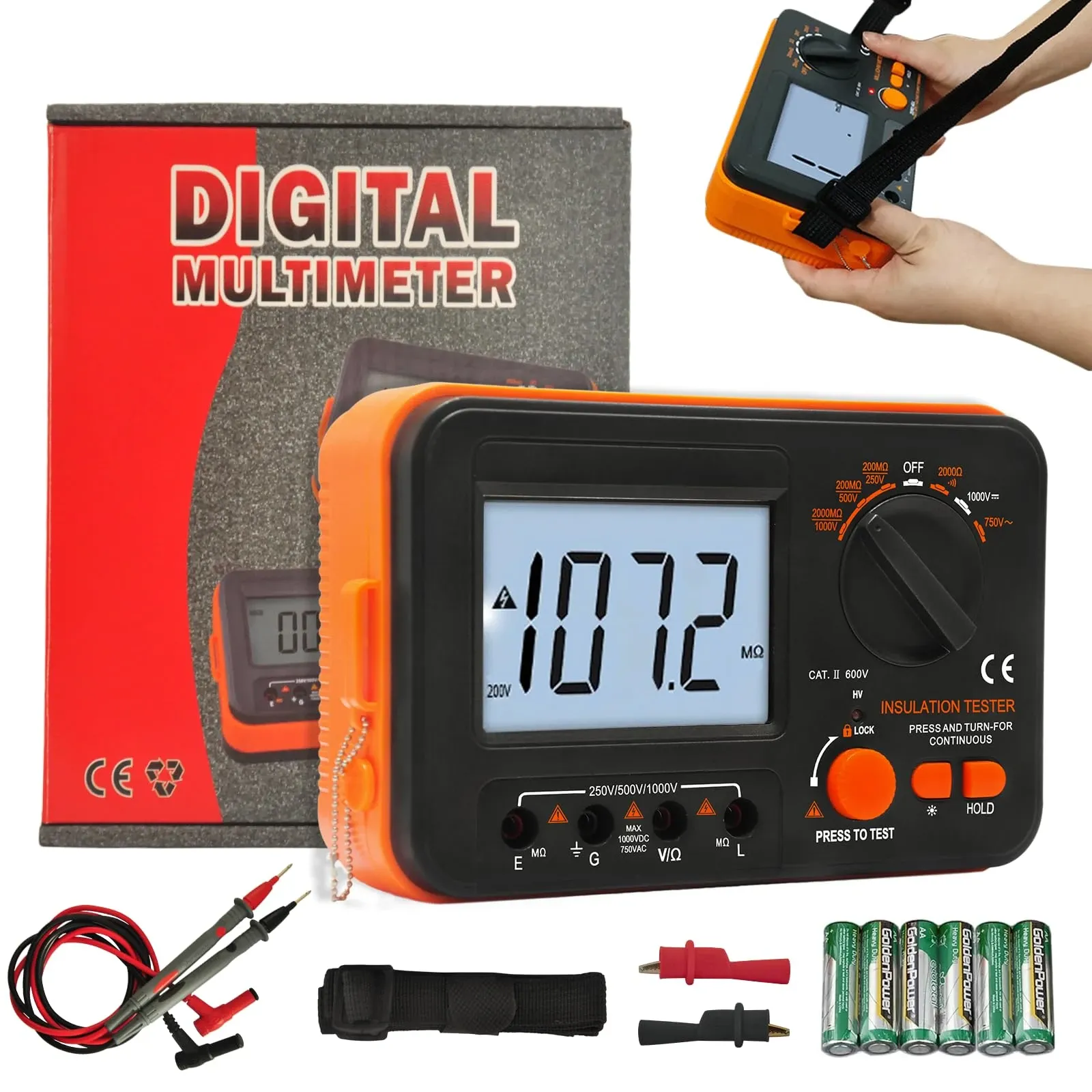
A digital insulation tester measures insulation resistance in cables, windings and installations, showing the result in megohms (MΩ) on a digital display. This guide takes the workshop view: what the accuracy and range numbers really mean, how a £69 backup meter compares with a premium brand, and where a spot-reading tester fits alongside a full PI/DAR set.
TL;DR: A digital insulation tester applies a DC test voltage (250V, 500V or 1000V on the Megohmmete Pro) and reads insulation up to 2000 MΩ. At £69.31 inc VAT (£57.76 ex VAT) it is a sensible second bench meter or van backup for a motor-repair shop — with one honest caveat: the published spec does not quote a formal accuracy figure, so cross-check it against your calibrated reference for anything that goes on paper.
Why accuracy and range actually matter
Insulation breakdown from heat, vibration, age, contamination and damp is what brings motors and cables back to your bench. A digital insulation tester lets you put a number on that condition instead of guessing. For a repair shop, two things decide whether a meter is worth having: does its range reach high enough to show a genuinely healthy winding, and can you trust the number enough to quote a customer or sign off a repair?
Insulation resistance testing is a required measurement under BS 7671 for initial verification and periodic inspection, and it is the backbone of before-and-after checks on a rewind. But the instrument only earns that trust once you understand its limits.
What "accuracy" means when the figure isn't published
Accuracy is how close the reading is to the true value; resolution is the smallest step the display can show. A tester can have fine resolution (the Megohmmete Pro uses a 1999-count backlit LCD) yet a wider accuracy band — the two are not the same thing.
Being straight about it: the published specification for the Megohmmete Pro does not state a formal accuracy figure such as ±(x% + digits). For a low-cost backup meter that is common, and for pass/fail screening well above the 1 MΩ minimum it rarely matters. But if a reading is going on a customer report or a warranty decision, treat it as an indicator and confirm it against a calibrated reference — do not assume a headline number the seller has not published. If you need a stated accuracy, ask the seller to confirm it in writing.
Range: what 2000 MΩ covers
The Megohmmete Pro reads insulation up to 2000 MΩ (2 GΩ) at 250V, 500V or 1000V, and it can also measure AC voltage up to 750V. For most LV motors, pumps and cables a healthy winding reads from tens of megohms into the hundreds, so 2000 MΩ of headroom is plenty to separate "clearly healthy" from "drifting down". If you routinely test large HV machines that read deep into the gigohm range, that is where a higher-specification instrument pays off.
Before and after a rewind: using it on the bench
On a motor-repair bench the workflow is simple and repeatable:
- Record an incoming winding-to-earth reading at 500V while cold, noting the temperature.
- Clean, dry or bake as needed, then re-read to confirm the improvement.
- After the rewind, take a final reading at the same voltage and temperature so the before/after comparison is fair.
Because a single reading moves with temperature and moisture, compare like with like rather than to an absolute number. For the winding-to-earth method in more detail, see the megohm meter guide; for the general procedure, see how to perform an insulation resistance test.
How a £69 meter compares with a premium brand
A premium instrument from a brand such as Fluke or Megger brings independently stated accuracy specs, traceable calibration options, timed PI/DAR and long-term support. The Megohmmete Pro competes on price: £69.31 inc VAT for a three-voltage, 2000 MΩ backlit tester. A customer review on the product page mentions readings that compared well "against my Fluke", but a seller-hosted testimonial is not the same as a calibration certificate — treat it as encouraging, not as proof. The honest positioning is a capable, low-risk second meter, not a replacement for your calibrated primary instrument.
When to step up to PI/DAR
Polarisation Index (PI, the 10-minute to 1-minute ratio) and DAR (60s to 30s) are timed tests that reveal moisture and contamination on larger machines, and they need an instrument that holds the voltage and times the reading automatically. The Megohmmete Pro is a spot-reading tester without a built-in PI/DAR timer, so use it to screen quickly and flag marginal machines for a full PI/DAR test on a higher-end set. For industrial trend testing across many assets, see the high resistance meter guide.
Digital versus analogue, in short
A clear digital read-out removes the parallax error of an analogue needle and is easier to photograph for a job record. The Megohmmete Pro runs on 6 × 1.5V AA batteries (not included), so keep a spare set on the bench. It comes with free UK delivery over £50, a 12-month warranty and 30-day returns — enough to trial it against your existing meter inside the return window. New to the fundamentals? Start with our electrical insulation tester guide.
Frequently Asked Questions
What is a digital insulation tester?
A digital insulation tester (also called an insulation resistance tester or megohmmeter) applies a DC test voltage — 250V, 500V or 1000V on the Megohmmete Pro — and measures insulation resistance in megohms, up to 2000 MΩ, on a backlit digital display rather than an analogue needle.
How accurate is a budget digital insulation tester?
Accuracy varies by model, and the Megohmmete Pro's published specification does not state a formal accuracy figure. For bench work where the number matters, cross-check it against a calibrated reference meter and ask the seller to confirm the accuracy before relying on it for a report.
Can a digital insulation tester replace a multimeter or an MFT?
No. It measures insulation resistance only. A multimeter checks voltage, continuity and low resistance, and a multifunction tester (MFT) also does loop impedance, RCD and continuity for certification. Use a digital insulation tester alongside them, not instead of them.
Does the Megohmmete Pro do Polarisation Index (PI) or DAR?
The Megohmmete Pro is a spot-reading tester without a built-in PI/DAR timer. It is ideal for quick before-and-after insulation checks on a rewind; for timed PI/DAR on large machines, step up to an instrument with that function.
Ready for a digital insulation tester that matches this guide?
View Megohmmete Pro — £69.31