High Resistance Meter UK: Insulation Trend Testing on Plant Motors
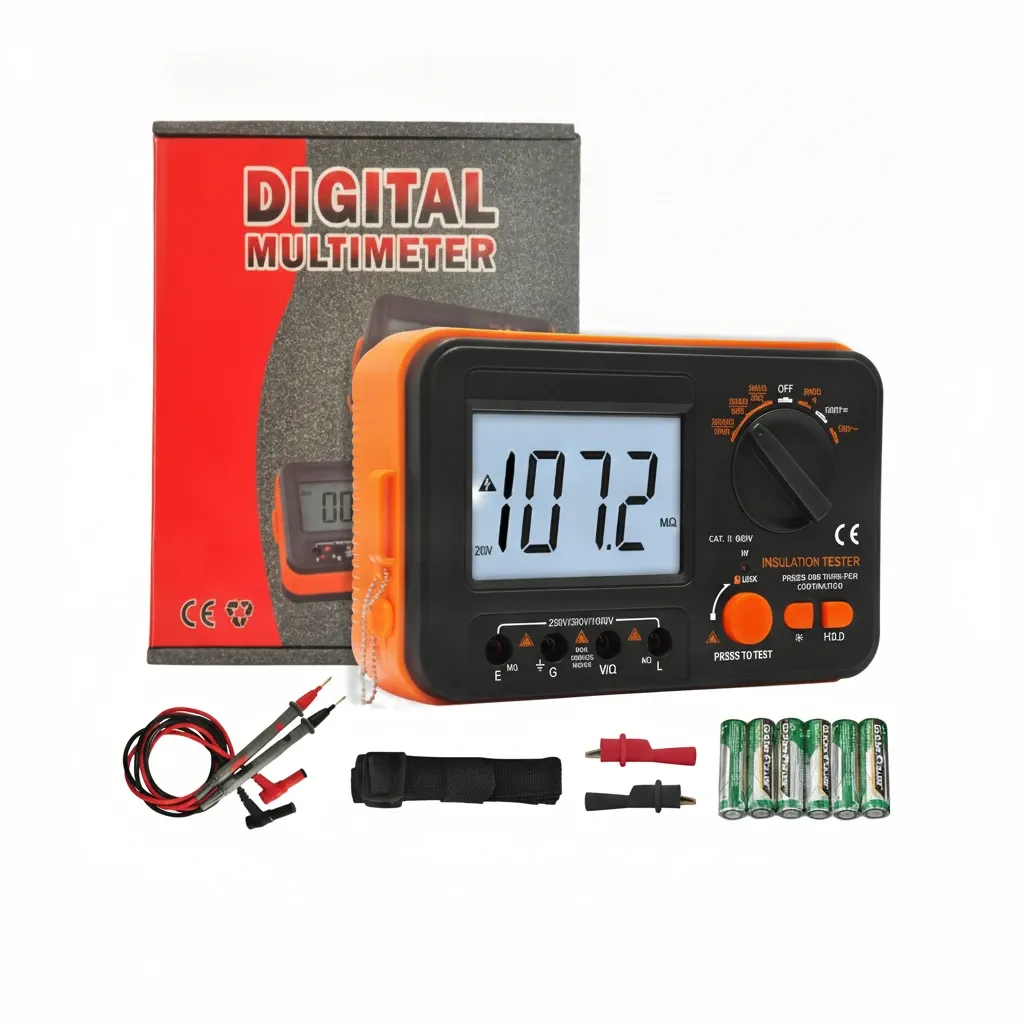
If you run planned maintenance on a UK food plant, packaging line or water-treatment site, a high resistance meter is how you catch degrading motor and cable insulation before it trips a line mid-shift. In a short shutdown window you rarely have time to put every asset on a top-tier diagnostic set, so a portable spot-reading meter earns its place: isolate, read the megohm value, log it against the asset number, move on. The Megohmmete Pro covers 250V, 500V and 1000V and reads insulation up to 2000 MΩ at £69.31 inc VAT (£57.76 ex VAT) — a practical screening tool, not a replacement for a calibrated diagnostic set.
Key Takeaways
- A high resistance meter measures insulation in the megohm-to-gigohm range, far beyond a standard multimeter's low-voltage ohms range.
- Match the DC test voltage to the motor or cable nameplate — BS 7671 Table 64 uses 250V, 500V or 1000V for LV work; higher is not automatically better.
- For a maintenance trend, record each reading with the asset number, test voltage and winding temperature so results are comparable shutdown to shutdown.
- Polarisation Index (PI) and Dielectric Absorption Ratio (DAR) are timed tests that need a meter with a built-in timer — the £69.31 Megohmmete Pro is a spot-reading screening tool, so PI/DAR is where you step up to a higher-end set.
What is a High Resistance Meter?
A high resistance meter, frequently referred to in the trade as a megohmmeter, is a specialised testing instrument designed to measure the electrical resistance of insulators. Unlike conductors, which allow current to flow freely, insulators are designed to restrict current flow. Over time, environmental factors such as moisture, dust, thermal stress, and chemical exposure degrade these insulating materials.
To assess degradation, the meter applies a controlled DC test voltage across the insulation, measures the minute leakage current that passes through the material, and calculates resistance using Ohm's Law. Bench and substation instruments can go to 5000V and beyond; a portable field meter like the Megohmmete Pro offers the three LV settings you use most on plant — 250V, 500V and 1000V. For a closer look at how the digital versions work, see our ultimate guide to digital insulation testers in the UK.
Why UK Professionals Rely on High Resistance Meters
In the UK, insulation resistance testing underpins both compliance and uptime. It is a required measurement in BS 7671 (the IET Wiring Regulations) for initial verification and periodic inspection, and it is the backbone of condition-based maintenance on rotating plant. Catching a winding drifting from hundreds of megohms down towards single megohms lets you plan a rewind rather than suffer an unplanned stoppage.
Compliance with BS 7671
The 18th Edition of the IET Wiring Regulations (BS 7671) mandates stringent testing protocols for new electrical installations and periodic inspections of existing ones. A high resistance meter is indispensable for completing the necessary Electrical Installation Condition Reports (EICR). It allows electricians to verify that insulation resistance between live conductors and earth meets the minimum statutory requirements, typically 1 Megohm for low voltage installations.
Industrial Maintenance and Motor Diagnostics
For industrial maintenance teams, unexpected motor failure translates directly to lost revenue. By incorporating a high resistance meter into a predictive maintenance programme, engineers can track the degradation of motor winding insulation over time. This trend analysis allows for scheduled repairs rather than emergency replacements. If you are specifically focused on motor diagnostics, reading our megohm meter buyer's guide can provide additional context on specialised applications.
Standard Multimeter vs. High Resistance Meter
A common misconception among apprentices and facility managers is that a standard digital multimeter (DMM) can adequately test insulation. While a DMM can measure resistance (Ohms), it typically does so using a very low voltage, usually around 9 volts supplied by its internal battery.
This low voltage is insufficient to stress the insulation and reveal microscopic cracks, moisture ingress, or pinpoint tracking paths. A high resistance meter, on the other hand, generates a test voltage that mimics or exceeds the operating voltage of the circuit being tested. This high potential is required to force current through compromised insulation, providing a true reflection of the material's integrity under real-world operating conditions.
Key Features to Look for in a UK High Resistance Meter
When procuring a high resistance meter for professional use in the UK, several critical features dictate the instrument's utility, accuracy, and safety.
1. Selectable test voltages matched to the asset
Different assets call for different test voltages, so choose the voltage from the motor or cable nameplate rather than defaulting to the highest. The Megohmmete Pro offers 250V, 500V and 1000V, which covers the great majority of LV motors, pumps and feeders on a UK plant. If you routinely test ELV assets that need 50V/100V, or HV plant that needs 2500V/5000V, that is the point to specify a higher-spec instrument instead.
2. Polarisation Index (PI) and DAR — know when you need them
Time-resistance tests differentiate genuine insulation breakdown from temporary surface moisture, and they need an instrument that holds the voltage and times the reading automatically:
- Polarisation Index (PI): the ratio of the 10-minute reading to the 1-minute reading; a low PI on a large motor points to moisture or contamination.
- Dielectric Absorption Ratio (DAR): typically the 60-second reading divided by the 30-second reading, a quicker check for smaller motors.
Being honest about scope: the Megohmmete Pro is a spot-reading tester without a built-in PI/DAR timer, so use it to screen assets quickly and flag anything marginal for a full PI/DAR test on a higher-end instrument. For the accuracy and range trade-offs, see our digital insulation tester guide.
3. Safety category (CAT rating) and GS38 leads
Check the overvoltage (CAT) rating against where you test. The Megohmmete Pro is described as a CAT III 600V equivalent design, which suits distribution boards, motor terminal boxes and permanently connected plant; work at the origin of the installation calls for a CAT IV instrument. Whatever you buy, use HSE GS38-compliant leads — probes with finger barriers and no more than 4mm of exposed tip — and confirm the exact CAT and GS38 detail with the seller. For the fundamentals, see our guide on electrical insulation testers.
4. Clear digital display
A clear digital read-out removes the guesswork of interpreting an analogue sweep. The Megohmmete Pro uses a backlit 1999-count LCD, which is genuinely useful in a dim plant room or riser. Some higher-end units add on-board data logging and PC export; if paperless records matter to your team, confirm whether a given model logs internally or whether you will key readings by hand into your CMMS.
Best Practices for Safe and Accurate Testing
Using a high resistance meter requires strict adherence to safety protocols. Applying 1000V to a circuit is inherently dangerous if proper procedures are not followed.
- De-energise the Circuit: Never connect a high resistance meter to a live circuit. Ensure the equipment under test is completely isolated from the mains supply, locked off, and proven dead using an approved voltage indicator.
- Discharge Capacitance: Cables and motor windings act as capacitors. Before and after testing, ensure the equipment is properly discharged to earth to prevent electric shocks. Many high-quality meters feature automatic discharge functions.
- Disconnect Sensitive Electronics: High test voltages will destroy microprocessors, Variable Frequency Drives (VFDs), and solid-state controls. Disconnect these components from the circuit before applying the test voltage.
- Maintain Clean Connections: Surface dirt and moisture on the test leads or the equipment terminals can create parallel leakage paths, resulting in artificially low resistance readings. Ensure all connection points are clean and dry.
"The integrity of electrical infrastructure relies on accurate, periodic testing. A dependable high resistance meter is not just a regulatory requirement; it is the frontline defence against electrical failure and fire hazards in the industrial sector."
A practical backup meter for your maintenance team
The Megohmmete Pro gives you fast 250V/500V/1000V insulation checks up to 2000 MΩ for spot-testing motors, pumps and cables in a shutdown window — a low-risk second meter to keep on the shelf.
£69.31 inc VAT (£57.76 ex VAT) · free UK delivery over £50 · 12-month warranty · 30-day returns.
View the Megohmmete Pro — £69.31Frequently Asked Questions (FAQs)
What is a good reading on a high resistance meter?
Acceptable readings depend on the operating voltage of the equipment being tested and the specific standard applied. Generally, for a 230V or 400V system in the UK, BS 7671 requires a minimum insulation resistance of 1 Megohm. However, in preventative maintenance, values in the hundreds of Megohms or into the Gigohm range are preferred, indicating healthy, dry insulation.
Can a high resistance meter damage equipment?
Yes, if used incorrectly. The high voltages generated by the meter can destroy sensitive electronic components, computers, smart meters, and solid-state drives if they are not disconnected prior to testing. Always ensure sensitive equipment is isolated from the circuit being tested.
How often should I calibrate my high resistance meter?
In accordance with UK quality management standards (such as ISO 9001) and general industry best practice, testing instruments should be calibrated annually. Regular calibration ensures the meter continues to provide accurate readings, which is legally critical when issuing safety certificates or EICRs. For further reading on maintaining your equipment, check our comprehensive guide to digital insulation testers.
Ready to upgrade your toolkit with Megohmmete?
Shop Testers — £69.31